Why beet pulp pressing bottlenecks happen
In a sugar beet factory, pulp pressing is not an isolated mechanical step. It is the visible endpoint of what happened upstream: beet quality, slicing, diffusion, juice extraction, fiber hydration, pectin behavior, microbial pressure, press loading, and thermal consistency.
When pressed pulp dry matter begins to drift downward, the press station often gets the blame. Worn screens, uneven feed, hydraulic pressure, and mechanical condition do matter. But in many factories, the limiting factor is not only the press. It is the material entering the press.
For process managers comparing options from an enzyme supplier for sugar beet processing, the practical question is not whether enzymes are interesting in theory. The question is whether a controlled biological aid can help make beet pulp more pressable, reduce variability, and support steadier factory operation under campaign pressure.
Enzymeschoice works with sugar beet processors on that exact interface: fiber, pectin, viscosity, diffusion behavior, clarification load, filtration response, and pulp dewatering stability.
The press sees every upstream variation
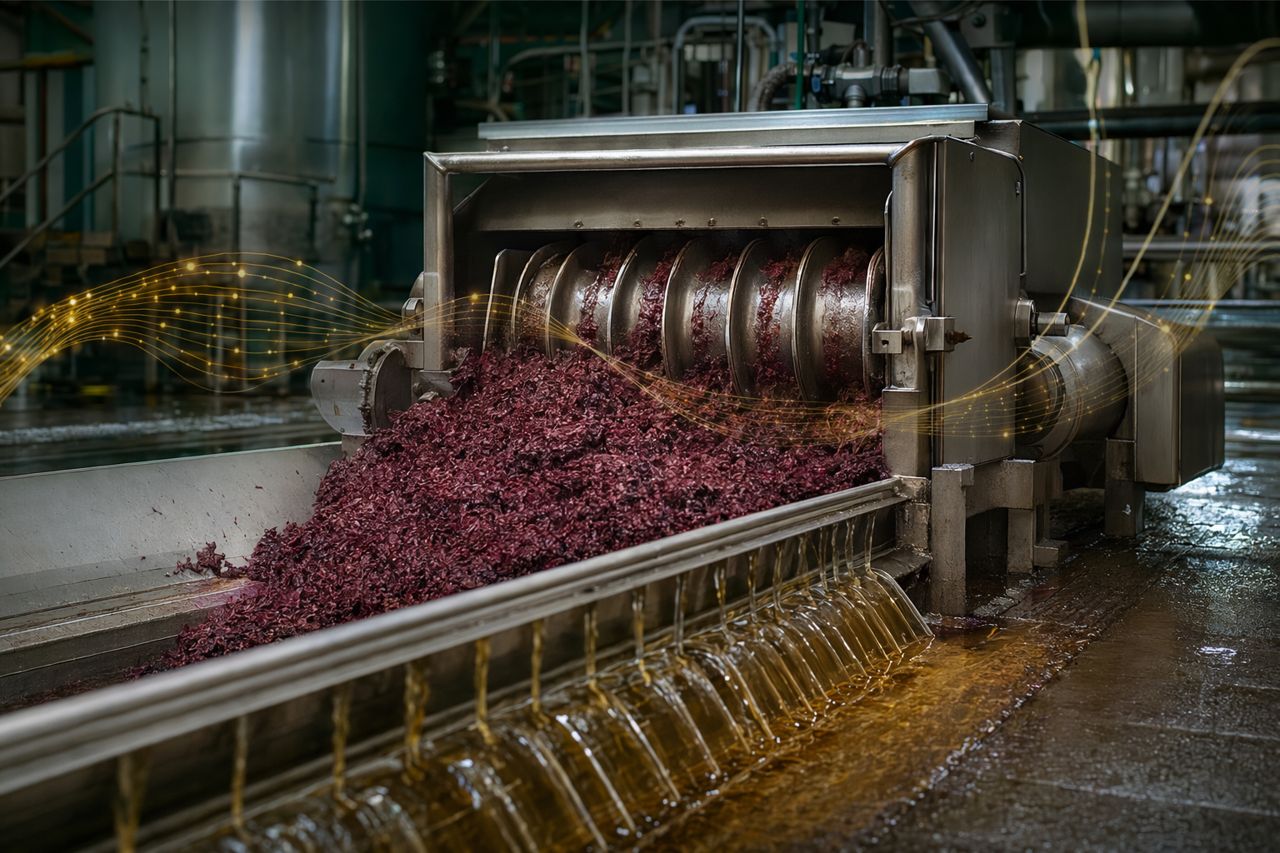
A beet pulp press receives a wet, fibrous, heat-treated material that has already passed through extraction. If the cossettes were bruised, if diffusion conditions were uneven, if pectin release increased, or if microbial by-products developed, the press receives a more difficult substrate.
Typical symptoms include:
- Lower pressed pulp dry matter despite normal press settings
- Higher press torque or unstable mechanical loading
- Wet zones in the press cake
- Increased slippage or inconsistent plug formation
- More free liquid returning to the process
- Elevated load on pulp drying capacity
- Higher steam or thermal demand in downstream drying
- Operator adjustments that help briefly, then drift again
The press may still be mechanically sound. The bottleneck can be biochemical, structural, or rheological.
Fiber structure: why beet pulp holds water so tightly
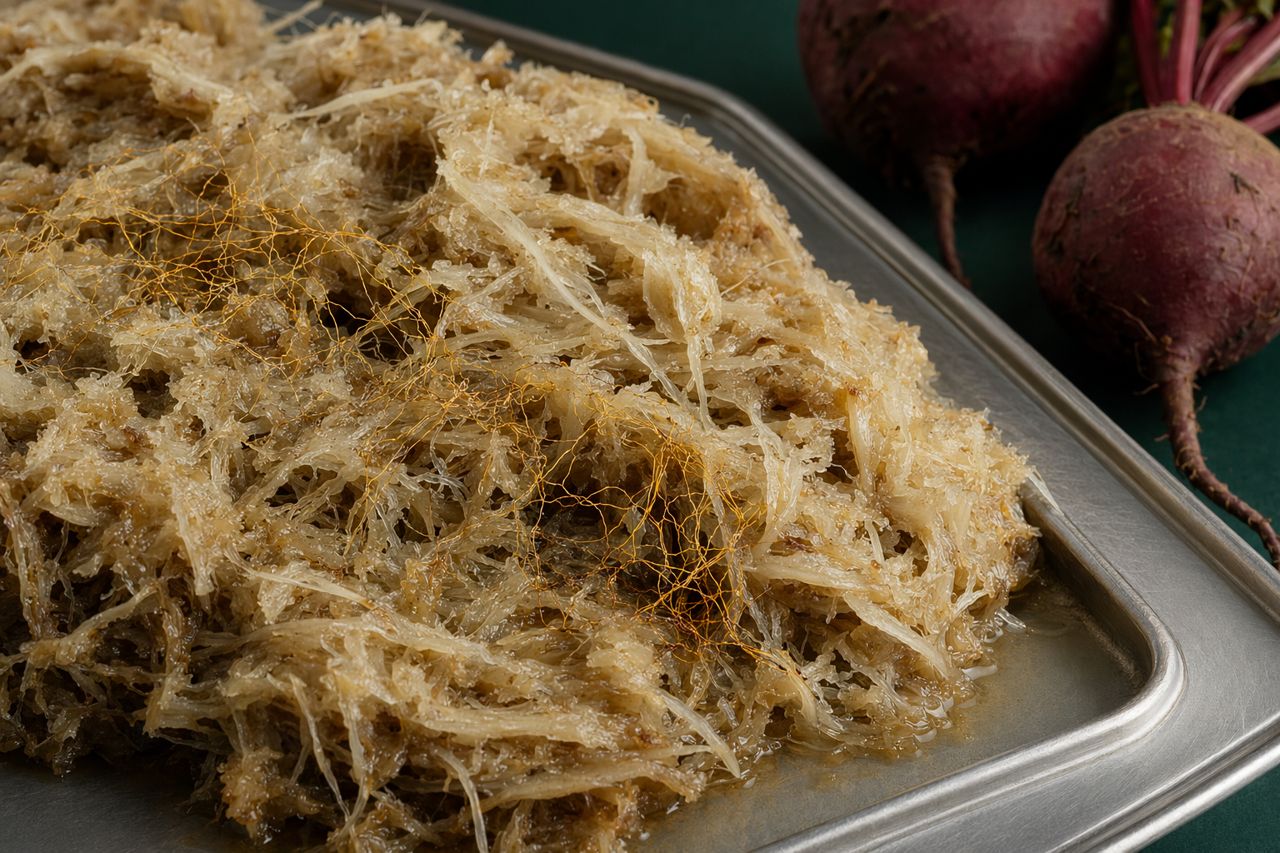
Sugar beet pulp is built from cell wall materials designed to retain moisture. After diffusion, much of the sugar has been extracted, but the residual pulp matrix still contains insoluble fiber, hemicellulose, cellulose, pectic substances, and bound water.
Not all water in pressed pulp behaves the same way.
Free water
This is the water the press can remove most readily. It drains through screens and channels when the pulp bed forms correctly.
Interstitial water
This sits between fibers and within the porous pulp structure. It depends heavily on bed permeability, press loading, and particle geometry.
Bound water
This is held by hydrated fiber and pectic material. It does not respond as cleanly to mechanical force. If the pulp matrix is highly hydrated, more pressure does not always translate into proportional dry matter improvement.
This is where enzyme-supported conditioning may be relevant. The goal is not to liquefy pulp or weaken press structure. The goal is to help reduce excessive water-holding behavior so the press can do its mechanical work with less variability.
Pectin: small chemistry, large operating impact
Pectin is one of the most important variables in beet processing. It can influence diffusion juice viscosity, clarification performance, filtration behavior, evaporator load, and pulp dewatering.
During beet handling and thermal processing, pectin can move from cell wall structure into the liquid phase or remain associated with pulp fibers. Depending on beet condition and process temperature history, pectin can contribute to:
- Higher juice viscosity
- Slower settling or less compact precipitate behavior
- Reduced filtration clarity or throughput
- More persistent foam and entrained solids
- Wetter pulp leaving the press
- Increased variability between shifts or beet deliveries
A process aid selected for pectin behavior must be chosen carefully. In a sugar beet factory, the aim is controlled modification, not uncontrolled breakdown. The wrong approach can create downstream penalties. The right approach is evaluated around measurable plant priorities: diffusion efficiency, press stability, clarification load, filtration behavior, and final operating cost.
Dextran and microbial pressure can make pressing worse
While dextran is often discussed in relation to viscosity and sugar recovery, it can also influence the broader flow behavior of process streams. Beet condition, frost-damaged roots, delayed processing, warm storage, or microbial growth can raise the probability of high-viscosity polysaccharide challenges.
When dextran or related microbial by-products are present, operators may see:
- Sticky juice behavior
- Slower filtration response
- Increased viscosity in process loops
- Less predictable clarification
- Higher load on evaporation and crystallization control
- Pulp that behaves inconsistently under press force
This is why a modern beet-processing enzyme program should not be viewed as a single additive decision. It should be treated as a process-stability tool, matched to observed factory symptoms and campaign conditions.
Press loading: the mechanical side of the bottleneck
Even with well-conditioned pulp, press loading must remain controlled. Presses are sensitive to feed consistency, throughput pressure, screen condition, pulp temperature, and the balance between residence time and compression.
Common loading-related bottlenecks include:
-
Overfeeding the press
Higher feed rate can reduce residence time and disrupt drainage paths. -
Uneven feed distribution
One section of the press may carry more wet pulp, causing localized wet cake and unstable torque. -
Screen fouling or blinding
Fine fiber, pectin-rich material, and sticky solids can reduce drainage efficiency. -
Temperature drift
Cooler pulp can dewater differently, especially when viscosity and fiber hydration are already unfavorable. -
Variable beet quality
The same press setting may perform differently across fields, storage lots, frost exposure, or late-campaign beets.
A successful improvement plan usually combines mechanical inspection with material conditioning. Presses cannot compensate indefinitely for pulp that is entering the station with excessive water-binding behavior.
Dry matter is not just a press number
Pressed pulp dry matter affects energy balance. Every additional amount of water carried into drying requires heat, time, and capacity. When dry matter drops, the pulp dryer becomes a campaign bottleneck faster than expected.
Lower dry matter can contribute to:
- Higher dryer energy demand
- Lower effective dryer throughput
- More vapor handling load
- Increased risk of uneven final pulp quality
- Reduced flexibility when beet intake rises
- More pressure on maintenance windows and operator attention
For factories selling dried pulp, pelleted pulp, or managing pulp as a co-product stream, pressing stability has direct commercial value. It is not only a utility issue. It affects logistics, product consistency, and factory bottleneck planning.
Where enzyme-supported conditioning can help
Enzyme solutions for sugar beet processing are most useful when they are tied to a defined process target. For pulp pressing, that target is usually improved dewatering behavior and more stable dry matter under realistic campaign conditions.
Depending on the factory’s beet quality, process design, and operating constraints, enzyme-supported conditioning may help address:
- Pectin-related water binding
- Viscosity contributions from soluble polysaccharides
- Inconsistent drainage through the pulp bed
- Clarification and filtration load linked to pectin release
- Diffusion-side extraction limitations
- Press variability during difficult beet periods
The practical value is not a dramatic one-day claim. It is the ability to create a more predictable operating window: steadier press behavior, fewer emergency adjustments, and better alignment between diffusion, clarification, pressing, and drying.
What process managers should measure before changing anything
Before evaluating an enzyme program, gather a short baseline. The most useful baseline combines mechanical, thermal, and material data.
Recommended plant observations
- Pressed pulp dry matter trend by shift
- Press feed rate and press loading pattern
- Press torque or hydraulic behavior where available
- Pulp temperature into the press
- Diffusion conditions and cossette quality
- Juice viscosity indicators used on site
- Clarification and filtration stability
- Dryer load, steam demand, or throughput limits
- Beet source, storage time, frost impact, and campaign timing
The aim is to separate a mechanical limitation from a material-conditioning limitation. In many cases, both are present. That is why Enzymeschoice programs are built around process context rather than generic dosing language.
What a controlled trial should look like
A useful beet pulp pressing trial should be calm, measurable, and realistic. It should not disrupt campaign priorities or rely on isolated snapshots.
A strong trial plan includes:
- A clearly defined objective such as dry matter stability, press load smoothing, or dryer relief
- Baseline data before the trial window
- Consistent observation of beet quality and diffusion conditions
- A controlled dosing location appropriate to the process design
- Operator notes on press behavior, screen condition, and wet cake patterns
- Comparison against similar beet and throughput conditions where possible
- A review that includes both pressing and downstream drying impact
The outcome should be judged by factory value: more stable dewatering, less avoidable load, and better operating confidence across changing beet conditions.
Why supplier fit matters
The right supplier is not simply shipping an enzyme product. For sugar beet factories, supplier fit means understanding the campaign environment: variable beet quality, limited trial windows, strict hygiene expectations, thermal constraints, process recirculation, and the cost of uncertain operation.
Enzymeschoice supports sugar beet processors with enzyme solutions selected for plant realities, including:
- Diffusion efficiency and cossette behavior
- Juice viscosity control
- Pectin management
- Dextran-related process challenges
- Clarification and filtration behavior
- Pulp pressing and dry matter stability
- Predictable dosing for industrial operation
- Technical support aligned with refinery-floor decision making
Our position is deliberately practical. We help teams evaluate where biological process support can reduce variability and where mechanical or operational corrections should come first.
Key takeaway
Beet pulp pressing bottlenecks are rarely caused by one variable. Fiber structure, pectin hydration, microbial viscosity contributors, press loading, temperature, screen condition, and beet quality all intersect at the press.
When pressed pulp dry matter becomes unstable, the most productive question is not only, “Can the press push harder?” It is, “Can the pulp arrive at the press in a more drainable, predictable condition?”
That is the operating space where a field-focused enzyme supplier for sugar beet processing can add value.
Request a process-fit quote
If pulp pressing, dry matter, viscosity, or filtration behavior is limiting your campaign stability, Enzymeschoice can help you evaluate an enzyme-supported approach for your factory conditions.
Request a quote using the on-site form and include your main bottleneck, beet campaign timing, and the process area you want to stabilize.