Enzyme Programs for Beet Campaign Variability
Beet campaigns are rarely steady. Beet quality shifts by field, pile condition, frost exposure, storage time, microbial load, and slicing performance. Those changes move directly into the factory: cossette permeability, diffusion efficiency, juice viscosity, clarification load, filtration behavior, evaporator stability, and sugar-end predictability.
Enzymeschoice supplies enzyme programs to sugar beet factory teams, and to the distributors who supply them, that need practical process aids, not generic catalog claims. We focus on factory-floor constraints: where the bottleneck appears, how the juice behaves, what the campaign schedule allows, and how dosing can be kept predictable under changing beet conditions.
Request a quote: send the problem or product, the quantity per campaign and the delivery destination. Price, pack format and lead time are quoted per order.
Enzymes Built Around Real Beet Campaign Variability
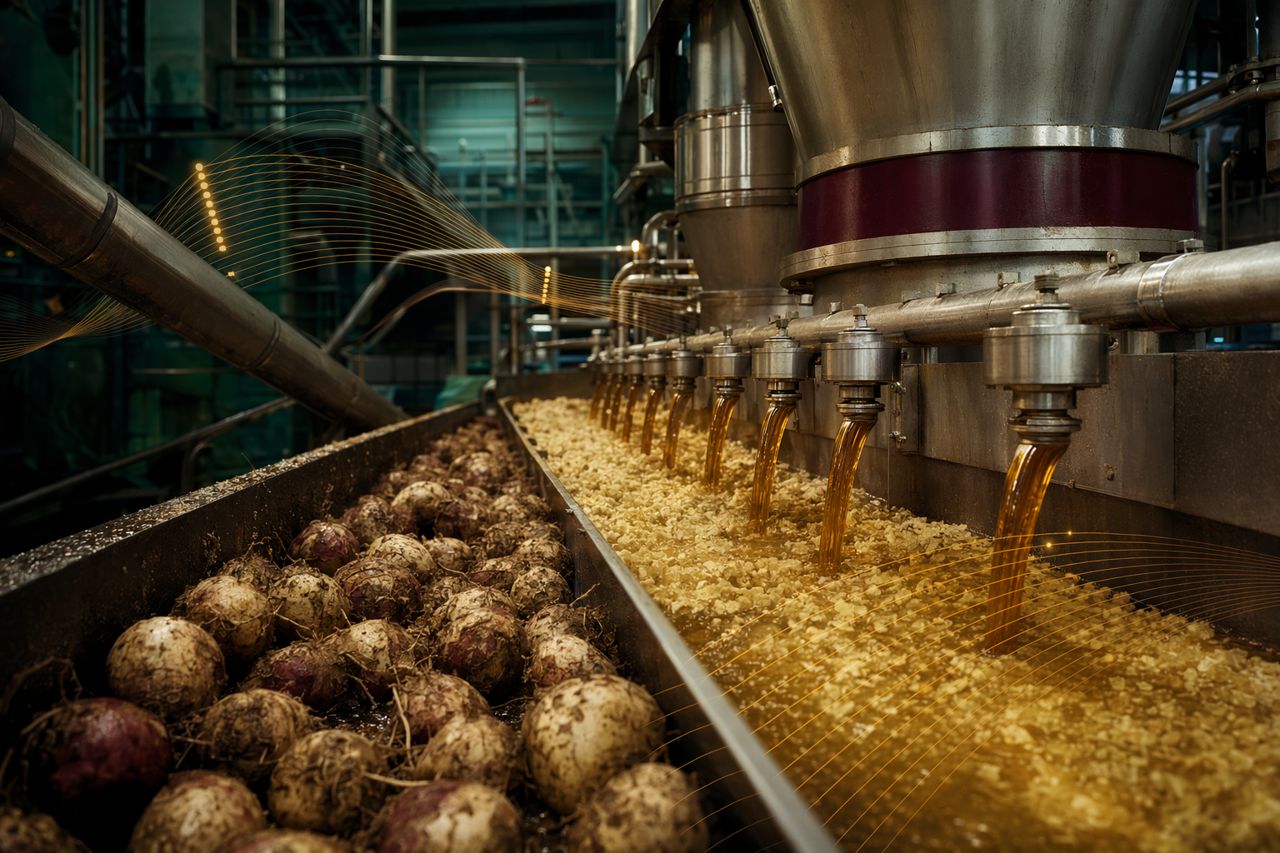
Sugar beet factories are asked to process raw material that changes faster than the operating window. Frost-damaged beet, deteriorated beet, mechanically stressed beet, and higher microbial pressure can all increase the burden on extraction and purification.
Targeted enzyme use can support:
- More controlled juice viscosity when pectin-driven thickening appears
- Better flow behavior through diffusion and downstream transfer points
- Support for dextran-related challenges where microbial activity has affected juice handling
- Improved clarification and filtration behavior under difficult raw material conditions
- More predictable operation when beet quality varies across campaign weeks
- Reduced stress on bottleneck equipment caused by sticky or slow-moving juice
The goal is not to replace process discipline. The goal is to give factory teams another controlled lever when raw material variation is forcing the process out of balance.
Where Enzymeschoice Enzyme Programs Fit in the Factory
Diffusion and Extraction Support
Cossette condition and beet tissue behavior influence how efficiently sugar transfers into juice. When damaged beet or high pectin contribution affects flow, enzyme programs may help reduce resistance in the liquid phase and support steadier extraction conditions.
Enzymeschoice works with process managers to understand diffusion temperature, residence time, cossette quality, raw juice behavior, and the operating constraint that needs protection.
Juice Viscosity Control
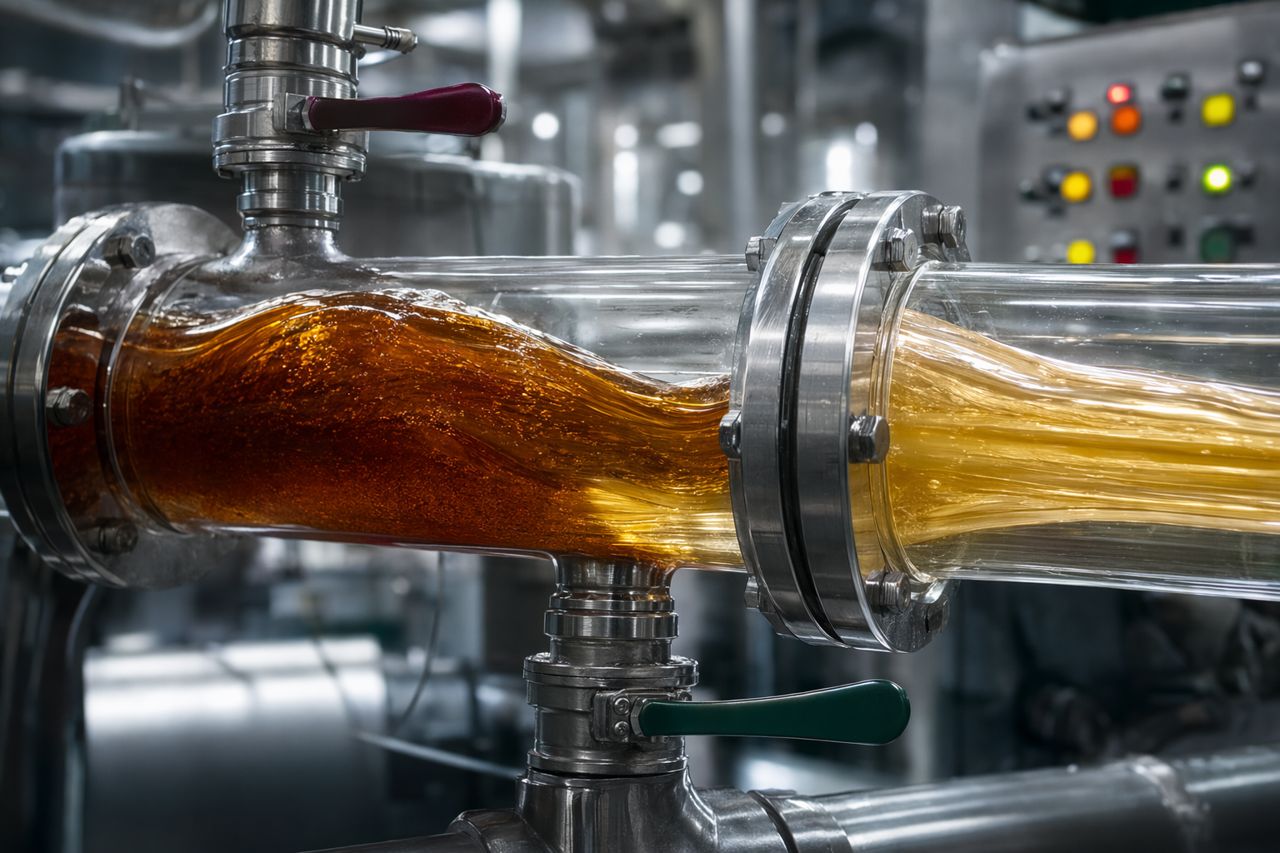
High viscosity can show up as slower movement, reduced heat transfer, heavier clarification loading, and filtration instability. Pectin-related viscosity is a common concern when beet quality is stressed.
Enzymeschoice enzyme blends are selected to help manage viscosity contributors in a way that fits the existing process window. We focus on controlled dosing, practical handling, and observable plant indicators such as flow, pressure trend, turbidity response, and cycle stability.
Dextran and Microbial Pressure Management
When microbial pressure is present, dextran can make juice handling less predictable. It may affect filtration, crystallization behavior, and the overall stability of downstream operations.
Enzymeschoice supports factories with enzyme options intended for dextran-related process challenges, especially during campaigns with deteriorated beet, warm storage conditions, or delayed processing windows.
Clarification and Filtration Behavior
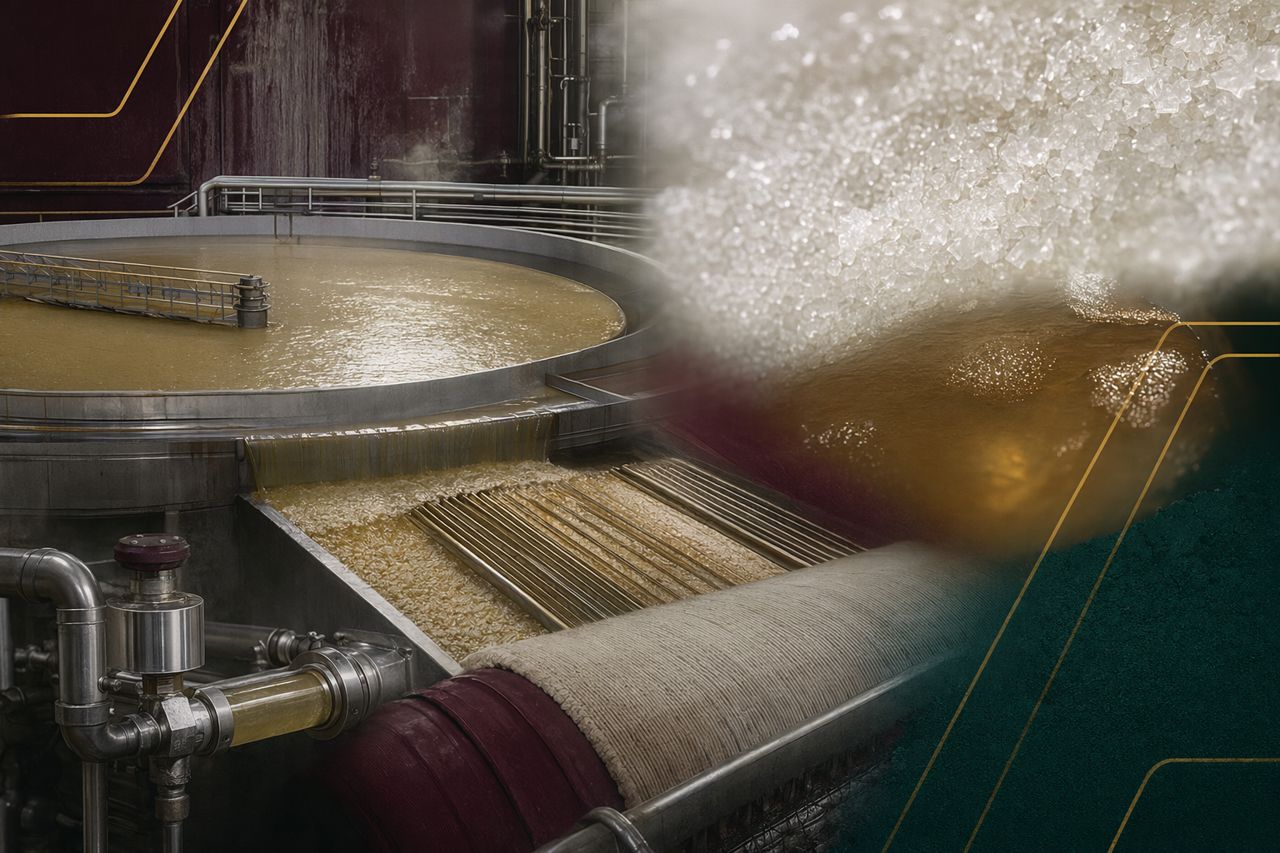
Clarification systems are sensitive to the quality of incoming juice. Variable pectin, suspended solids, and microbial by-products can affect settling, mud handling, filtration rates, and chemical demand.
A well-matched enzyme program can help improve the way juice behaves before and through clarification and filtration. The result factory teams look for is not a marketing number. It is steadier operation, fewer sudden changes, and better control of bottleneck equipment.
Supply for Factory-Scale Use
Enzymeschoice supplies enzyme solutions for industrial sugar beet factory operations, with attention to campaign planning and bulk handling requirements.
Our bulk supply approach includes:
- Product selection based on the factory bottleneck and beet condition
- Dosing guidance aligned with existing process equipment
- Practical packaging and delivery planning for campaign schedules
- Support for trial structure and scale-up review
- Documentation suitable for procurement, quality, and operations teams
- Technical conversations with people who understand refinery-floor constraints
We do not ask factories to redesign the process around the enzyme. We fit the enzyme program around the process that already exists.
What We Evaluate Before Recommending a Program
A useful recommendation starts with the factory problem, not the product name. Enzymeschoice typically reviews:
- Beet condition: fresh, stored, frost-affected, deteriorated, or high-risk lots
- Diffusion behavior: cossette quality, extraction consistency, and flow limitation
- Juice behavior: viscosity, turbidity, foam tendency, and pressure trends
- Clarification performance: settling, mud volume, chemical demand, and carryover
- Filtration performance: cycle length, pressure rise, and throughput restriction
- Downstream impact: evaporator stability, crystallization behavior, and campaign interruptions
- Dosing location: where contact time and process conditions make practical sense
- Handling needs: storage, metering, operator workflow, and campaign logistics
This keeps the enzyme program grounded in measurable operating behavior.
Field-Proven Does Not Mean Overpromised
Sugar beet processing is complex. Enzymes are not a cure for poor slicing, severe microbial deterioration, or unstable process control. But when the limiting issue is linked to pectin, dextran, viscosity, or juice handling behavior, the right enzyme program can be a valuable operating tool.
Enzymeschoice works with process teams to define realistic objectives before supply begins. Common targets include steadier flow, smoother filtration, improved clarification behavior, more predictable dosing, and better resilience during difficult beet quality periods.
Why Process Managers Work With Enzymeschoice
- Calm technical support without inflated claims
- Sugar beet factory focus, not broad food-industry generalization
- Bulk enzyme supply aligned with campaign realities
- Clear discussion of viscosity, pectin, dextran, diffusion, and filtration constraints
- Trial planning that respects factory uptime and operator workload
- Quote support for procurement teams needing product, volume, lead time, and documentation clarity
Request a Quote
If your factory is preparing for campaign, working through difficult beet quality, or trying to protect a known bottleneck, Enzymeschoice can help define a practical enzyme supply option.
Use the on-site form to request a quote. Share the process challenge, campaign timing, estimated bulk requirement, and any known issues with viscosity, diffusion, clarification, filtration, pectin, or dextran.
Quote Form Guidance
To help us respond accurately, include:
- Factory location or delivery destination, and campaign timing
- Whether the order is for your own plant or for resale to sugar factories
- Primary bottleneck or operating concern
- Beet condition concerns, including frost damage or storage deterioration
- Current point of process stress: diffusion, raw juice, clarification, filtration, evaporation, or crystallization
- Desired bulk supply schedule
- Preferred contact for technical follow-up
Enzymeschoice will review the request and respond with a practical next step for bulk enzyme supply.