Diffusion Juice Viscosity Enzyme Troubleshooting
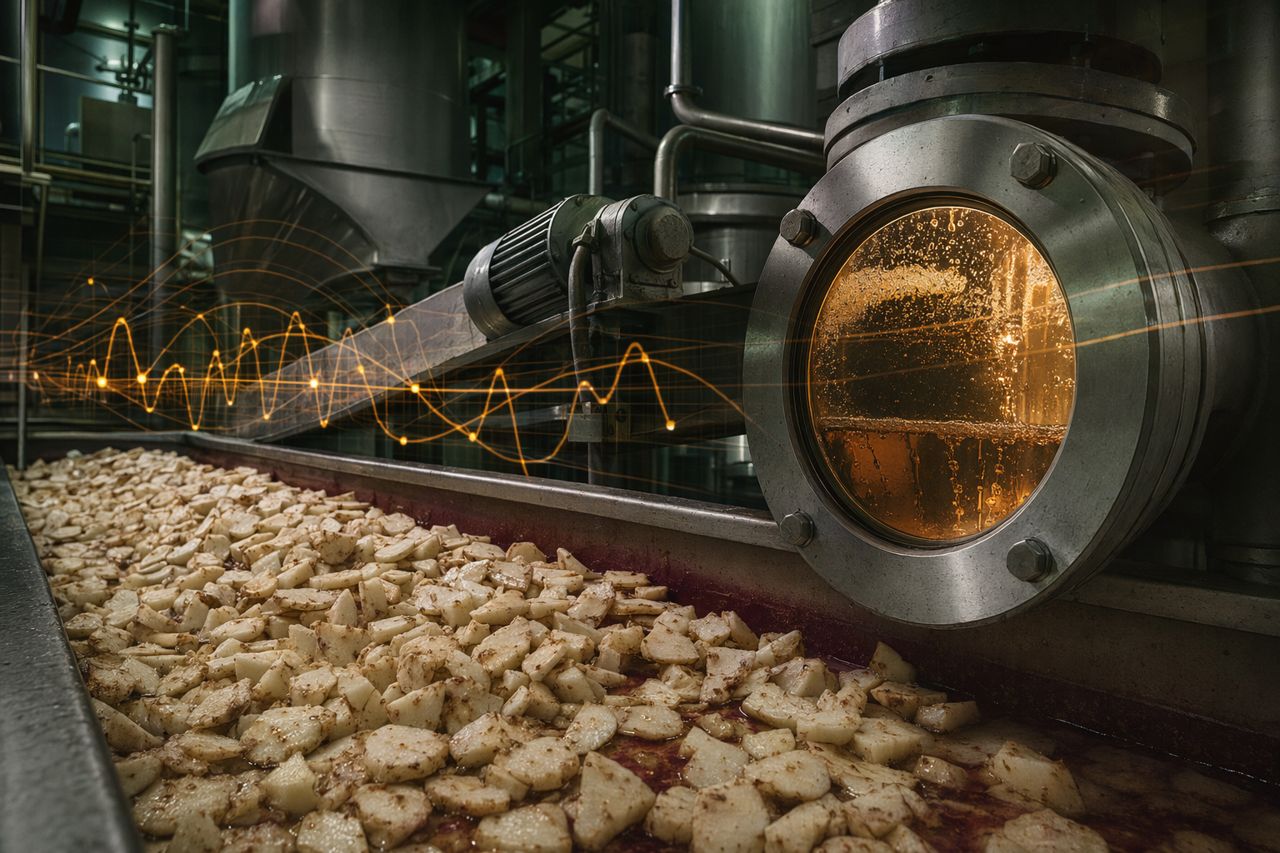
When diffusion juice gets heavy, the cause is rarely one variable. Beet condition, storage pressure, frost damage, mechanical slicing, microbial activity, pectin release, dextran formation, and diffuser behavior can overlap in the same campaign week.
Enzymeschoice supports sugar beet factories with enzyme programs built for practical decision-making: what symptom is showing up, where the polymer load is entering the process, which enzyme route fits the constraint, and how the dosing point can be controlled without disturbing the rest of the house.
As an enzyme supplier for sugar beet processing, we focus on the plant realities process managers see every shift: diffusion efficiency, juice clarification, viscosity control, filtration behavior, evaporator stability, and predictable operating response.
The viscosity problem starts before the juice looks difficult
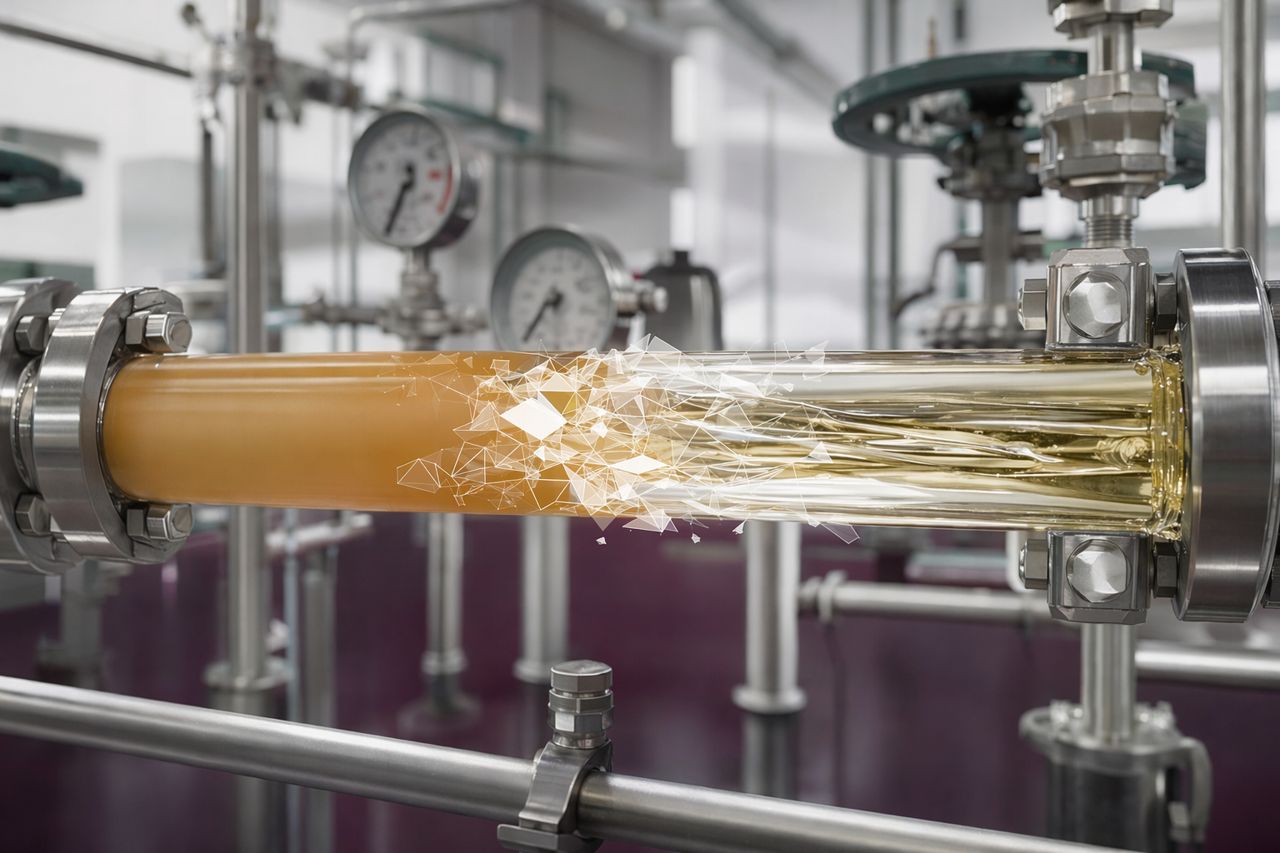
A beet campaign can look stable at receiving and still create variable juice behavior downstream. Viscosity often increases when soluble and colloidal materials move into the diffusion stream faster than the process can condition or remove them.
Common drivers include:
- Stored or weather-stressed beet releasing more cell-wall material during slicing and diffusion
- Frost-damaged or deteriorated beet contributing softer tissue and more soluble pectin load
- Microbial pressure forming dextran and other high-drag polysaccharides
- Rough cossette geometry increasing fines, pulp carryover, and extraction inconsistency
- Diffuser upsets that change contact, residence behavior, and extraction uniformity
- Seasonal beet variability that makes yesterday’s chemical settings less reliable today
The result is often seen as higher apparent viscosity, reduced juice mobility, slower separation, cloudy thin juice, short filtration cycles, or a syrup stream that forces conservative throughput.
Symptom-to-enzyme decision tree
Enzymeschoice helps narrow the enzyme decision by separating pectin-driven behavior from dextran-driven behavior and mixed-load cases.
If juice thickening follows poor beet condition
Likely concern: pectin and cell-wall-derived colloids.
Process signs may include:
- Increased drag in diffusion juice
- More suspended or gelatinous material
- Clarification sensitivity
- Variable settling behavior
- Shorter filtration runs
- Higher pressure rise across filtration equipment
Potential enzyme direction: pectin-focused treatment designed to reduce the effect of released pectic material before it creates downstream separation penalties.
If viscosity appears with microbial deterioration
Likely concern: dextran formation and microbial polysaccharide load.
Process signs may include:
- Rope-like or elastic juice character
- Disproportionate filtration difficulty
- Syrup handling drag
- Unstable crystal-end behavior
- Throughput limits that do not match normal beet quality indicators
Potential enzyme direction: dextran-focused treatment positioned where contact time and process compatibility support a measurable operating response.
If both patterns are present
Likely concern: mixed polymer load.
Process signs may include:
- High viscosity combined with cloudy clarification
- Diffusion instability plus filter pressure rise
- Good extraction one shift and poor separation the next
- Frequent chemical adjustment without durable improvement
Potential enzyme direction: staged or combined enzyme logic, selected around the dominant bottleneck and the available contact window.
Where enzyme placement matters
A correct enzyme choice can still underperform if it is placed where the process gives it poor access to the problem. We evaluate dosing location using plant-floor constraints, not generic assumptions.
Key placement questions include:
- Where is the viscosity load first visible?
- Is the target material entering with cossette damage, infected beet, recycle streams, or mixed juice?
- Is there enough contact opportunity before harsh process conditions reduce value?
- Will the dosing point support stable metering and operator visibility?
- Can the enzyme program be isolated for a controlled trial without disrupting campaign production?
The preferred point is usually the one that gives the enzyme clean contact, repeatable dosing, and a clear operating signal.
What process managers should track during troubleshooting
We recommend tracking enzyme response through existing factory indicators rather than chasing isolated laboratory numbers.
Useful operating signals include:
- Diffusion draft stability
- Juice viscosity trend
- Clarification appearance and mud behavior
- Thin juice clarity trend
- Filter cycle length
- Filter pressure rise
- Evaporator feed consistency
- Syrup handling behavior
- Pan-floor confidence during difficult beet periods
- Chemical correction frequency
- Throughput constraint changes by shift
The goal is not to add complexity. The goal is to make the process easier to read.
Enzyme routes for beet diffusion juice challenges
Pectin management
Pectin-focused enzymes help address viscosity and clarification drag caused by cell-wall material released from stressed or damaged beet. This route is often considered when diffusion juice becomes heavy, cloudy, or difficult to clarify after changes in beet condition.
Dextran management
Dextran-focused enzymes help address microbial polysaccharide effects that create disproportionate viscosity and filtration difficulty. This route is often considered when deterioration, storage pressure, or microbial load is suspected.
Campaign-flexible programs
Some factories need a program that can change emphasis as beet quality shifts. In those cases, Enzymeschoice supports a practical dosing plan with defined decision points, operator guidance, and quote-ready supply planning for the campaign window.
What Enzymeschoice brings to the troubleshooting call
Enzymeschoice is built for sugar beet factory conditions: fast decisions, narrow operating windows, and process teams that need supplier support grounded in the refinery floor.
We help your team define:
- The most likely viscosity driver
- The enzyme family that fits the bottleneck
- A controlled dosing strategy
- Practical monitoring points
- Compatibility questions to resolve before trial
- Supply format and volume planning
- A campaign-ready quote for procurement review
We avoid inflated cure-all claims. Enzymes are process tools. Their value comes from correct diagnosis, correct placement, and disciplined operation.
Request a quote for diffusion juice enzyme support
If diffusion juice viscosity is limiting extraction, clarification, filtration, or downstream throughput, send us the symptoms your team is seeing.
Include, if available:
- Beet condition and storage notes
- Where viscosity first appears
- Clarification and filtration behavior
- Recent process changes
- Current bottleneck equipment
- Desired campaign timing
- Estimated treatment window
Request a quote using the on-site contact form
Enzymeschoice will respond with a practical enzyme recommendation path, application questions, and quote details aligned to your sugar beet factory operation.